
What Do We Do When the Buckthorn Is Gone?
At Great River Greening, a lot of our restoration work begins with invasive species removal, but clearing out these aggressive plants is only step one. Once the buckthorn has been removed, how do we ensure it’s gone for good? And how can we establish native plant communities that can outcompete invasives? In conversation with Alex Bahr, a Metro Project Manager, we explore a few strategies to bring a native ecosystem back after buckthorn takes over.
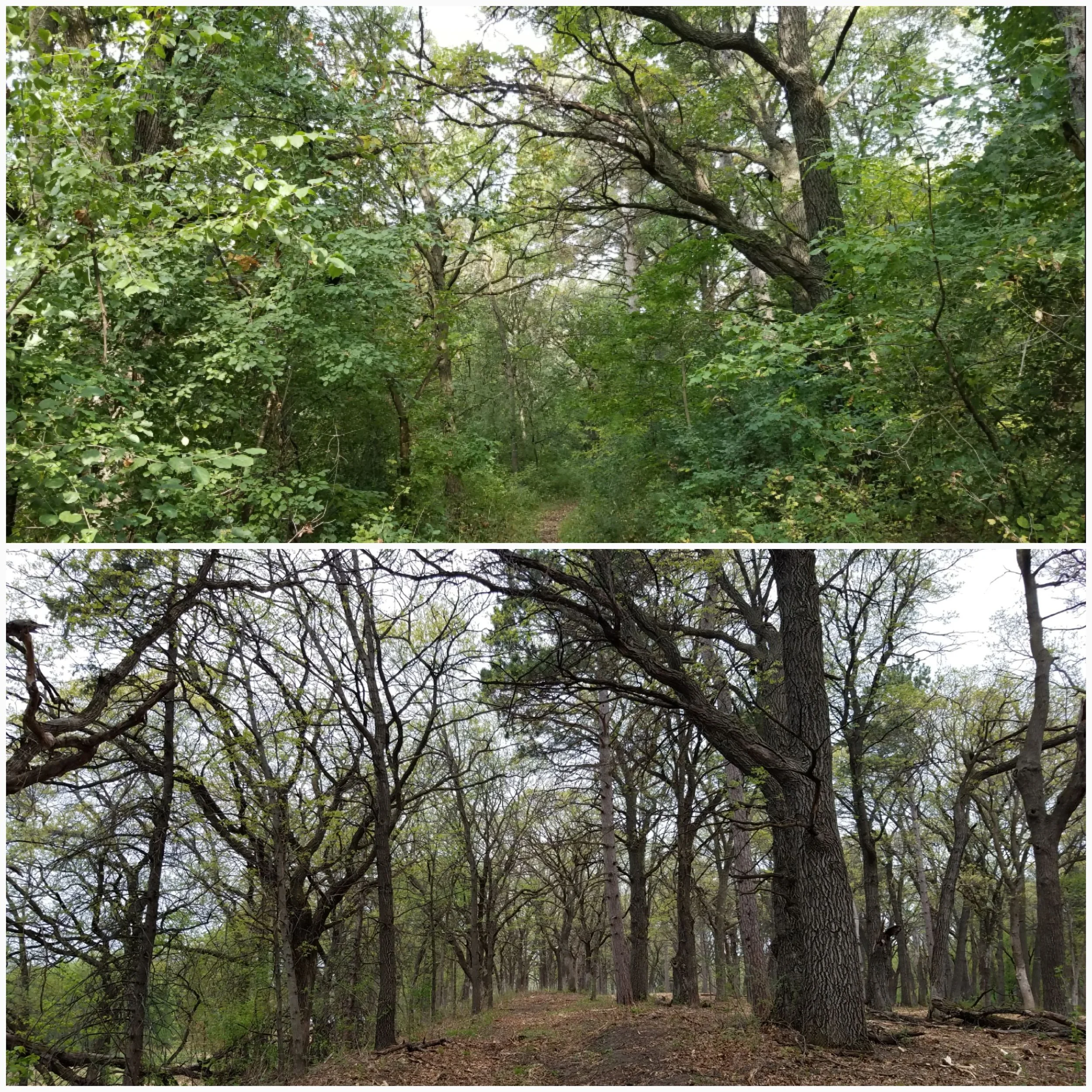
Great River Greening project site Talahi Woods before and after buckthorn removal
There’s a good reason buckthorn is one of Minnesota’s most prevalent invasive plants: it is incredibly resilient. This means that once we go in and remove the buckthorn, the next few steps are to keep the buckthorn gone. The leading strategies for buckthorn removal involve repeating any combination of methods, including using clippers and chainsaws to cut thickets down, applying chemical treatments on stumps to prevent regrowth, utilizing forestry mowing or prescribed burns to clear out existing growth, or —what we think is the cutest method— goats.
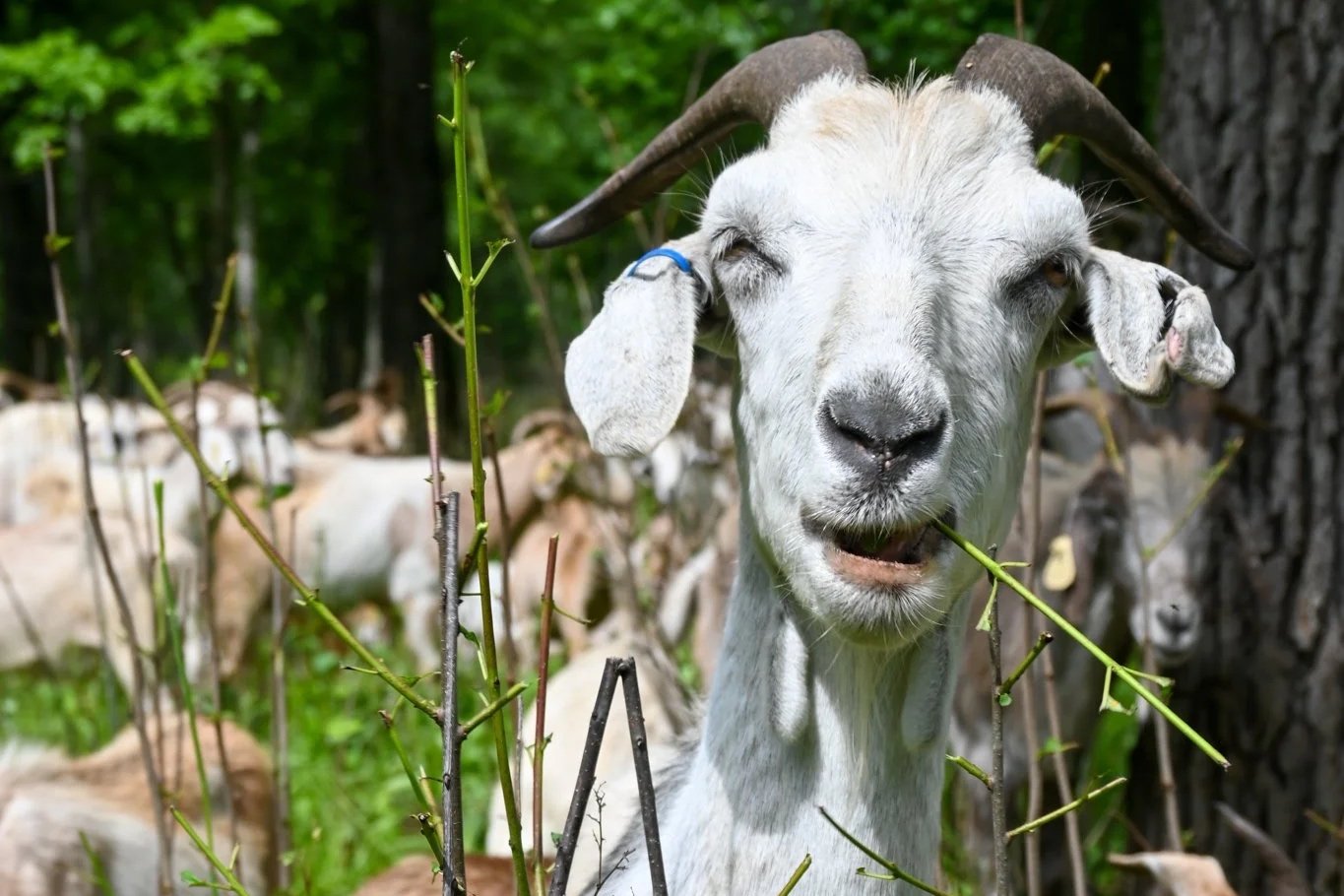
Goat browsing at a project site in Sherburne National Wildlife Refuge, photo by Ariana Golemis
Goat browsing is a method of invasive species control that involves fencing off an area dominated by an unwanted plant and releasing a herd of goats to graze on the leaves and young sprouts. Similar to repeated trimming, consistently keeping new growth at bay eventually deprives the plant of the energy needed to continue growing and spreading. As Bahr explains, this method is effective as it’s, “More natural and reminiscent of herbivory patterns that would’ve been happening.” Deer, bison and elk used to browse in habitats across the state, a natural deterrent to overgrowth of individual species. These goats do just the same, like at our project site in Lebanon Hills Regional Park, where we worked with Dakota County and Diversity Landworks to put goats to work on buckthorn. We saw that the goat browsing in Lebanon Hills had noticeable impacts to younger buckthorn, limiting regrowth.
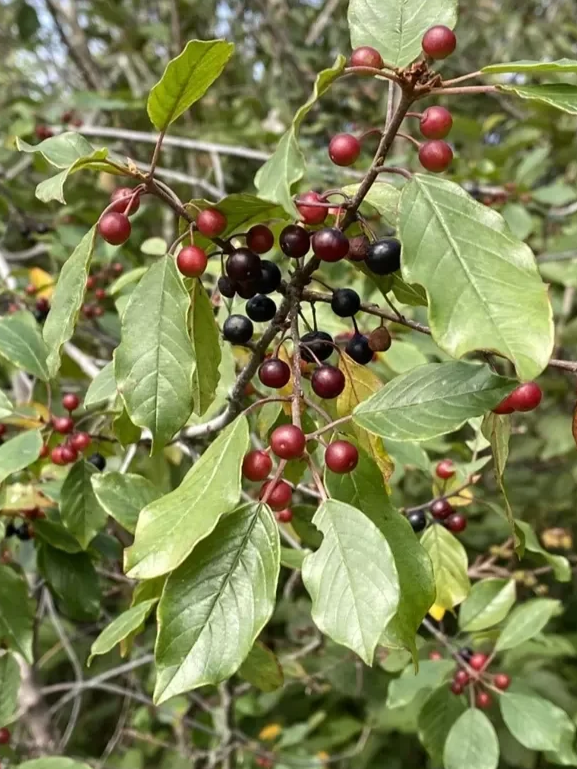
Now, when it comes to replacing buckthorn, it helps to get a picture of what we’re working against. Buckthorn is a highly aggressive, thorny shrub that originates from Europe. In its native habitat, buckthorn is kept at bay by insects and other highly competitive species that keep it from forming the dense understory thickets that occupy many North American forests. Without stressors to manage their population, the shrubs dominate Minnesota woodlands and prairies alike, outcompeting native species. Worse yet, buckthorn is a fruiting plant. When birds and mammals consume these berries, the seeds in their droppings help to further distribute this already aggressive plant.
Right: Glossy buckthorn with berries, photo from National Park Service
This particular phenomenon is part of the strategy that Bahr employs in restoration planning— by being “responsive to the way a lot of buckthorn spreads.” This brings us to one of our tools in outcompeting buckthorn: animals looking for a snack. When we’re able to replace buckthorn with robust, fruiting native species, we’re establishing a shrub that has not only evolved to thrive and grow throughout this ecosystem— it has hundreds of little helpers in the form of birds, mammals, and insects. Just by eating these berries, animals distribute seeds far and wide in their waste, a method of seed spreading called endozoochory. And our native plants have an advantage here— buckthorn berries are diarrhetic. Bahr hopes that, given the choice between a hearty, native fruit and a buckthorn berry, wildlife will learn to choose the option that better supports their nutrition and digestion.
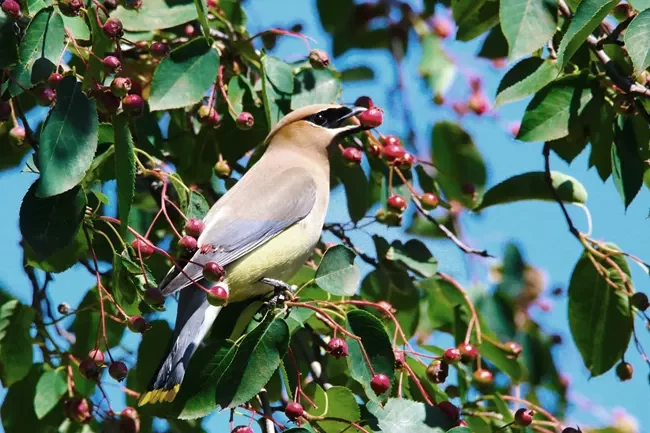
A Cedar Waxwing eats native serviceberries, photo from National Park Service
As tough and resilient as buckthorn is, our Minnesota native species have evolved to survive and thrive through our challenging climate, turbulent weather, and tumultuous seasons. Through the work of our staff, partnership with our Greening community, and the help of Minnesota creatures, we’re creating, supporting and sustaining buckthorn-free habitats— berry by berry, day by day.
Curious about what we’re planting or what you should replace buckthorn with? Click here for more info,
Funding for work in Talahi Woods and Lebanon Hills Regional Park provided by the Outdoor Heritage Fund.