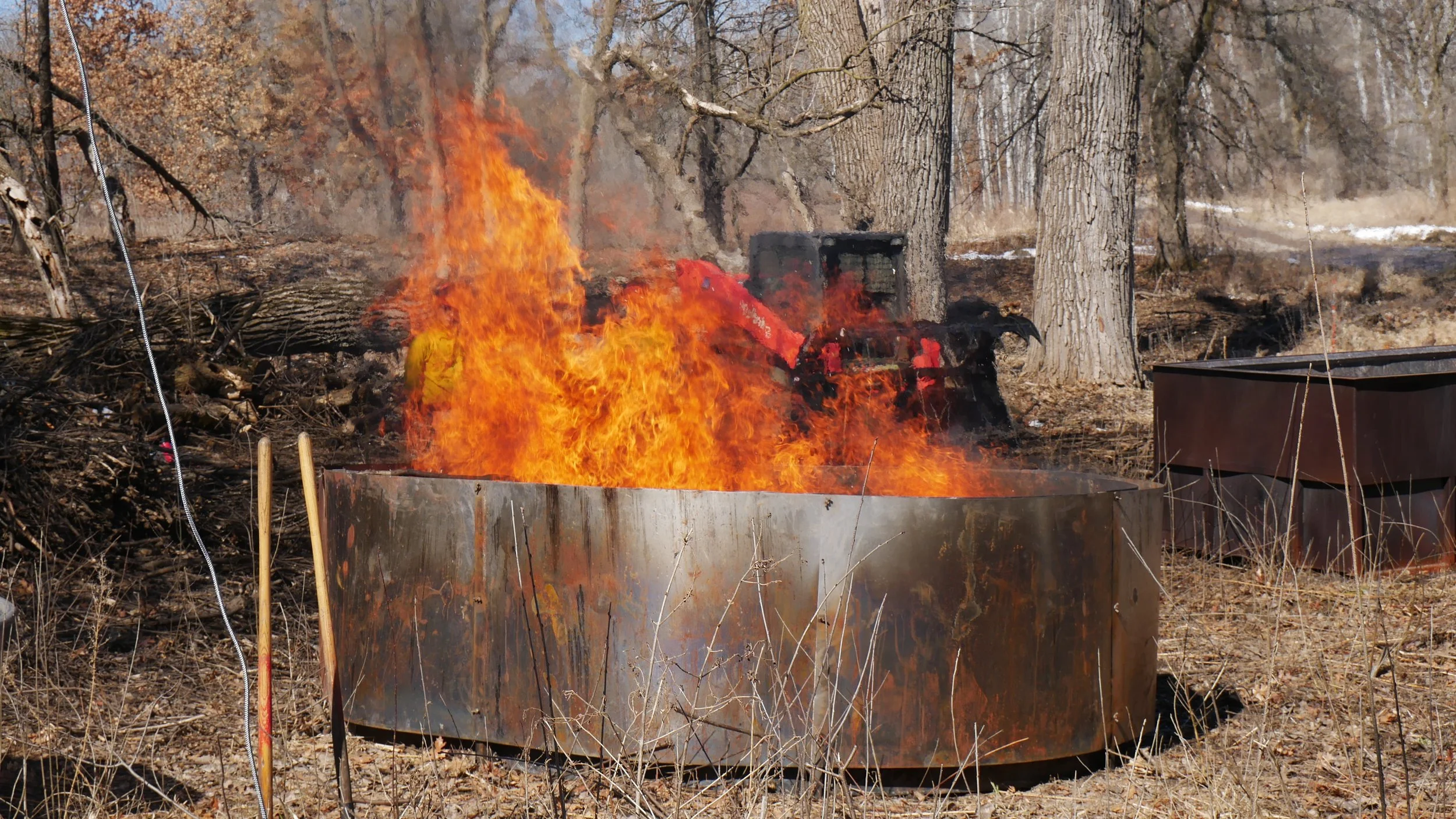
Biochar For Your Backyard
If you’ve been following our work, you’ve definitely heard us talk about biochar. At restoration sites across the state and at dozens of demonstrations, we’ve showcased the potential of this innovative technique for large and small scale projects alike. Projects so small, in fact, they can even be in your very own backyard.
Waste wood woes
From lopping buckthorn to chopping down hazardous branches, dealing with woody debris is a common part of managing any land. But piles of sticks and waste wood aren't just a hassle to get rid of. They can be dangerous, attracting pests and adding to the fuel load on your property.
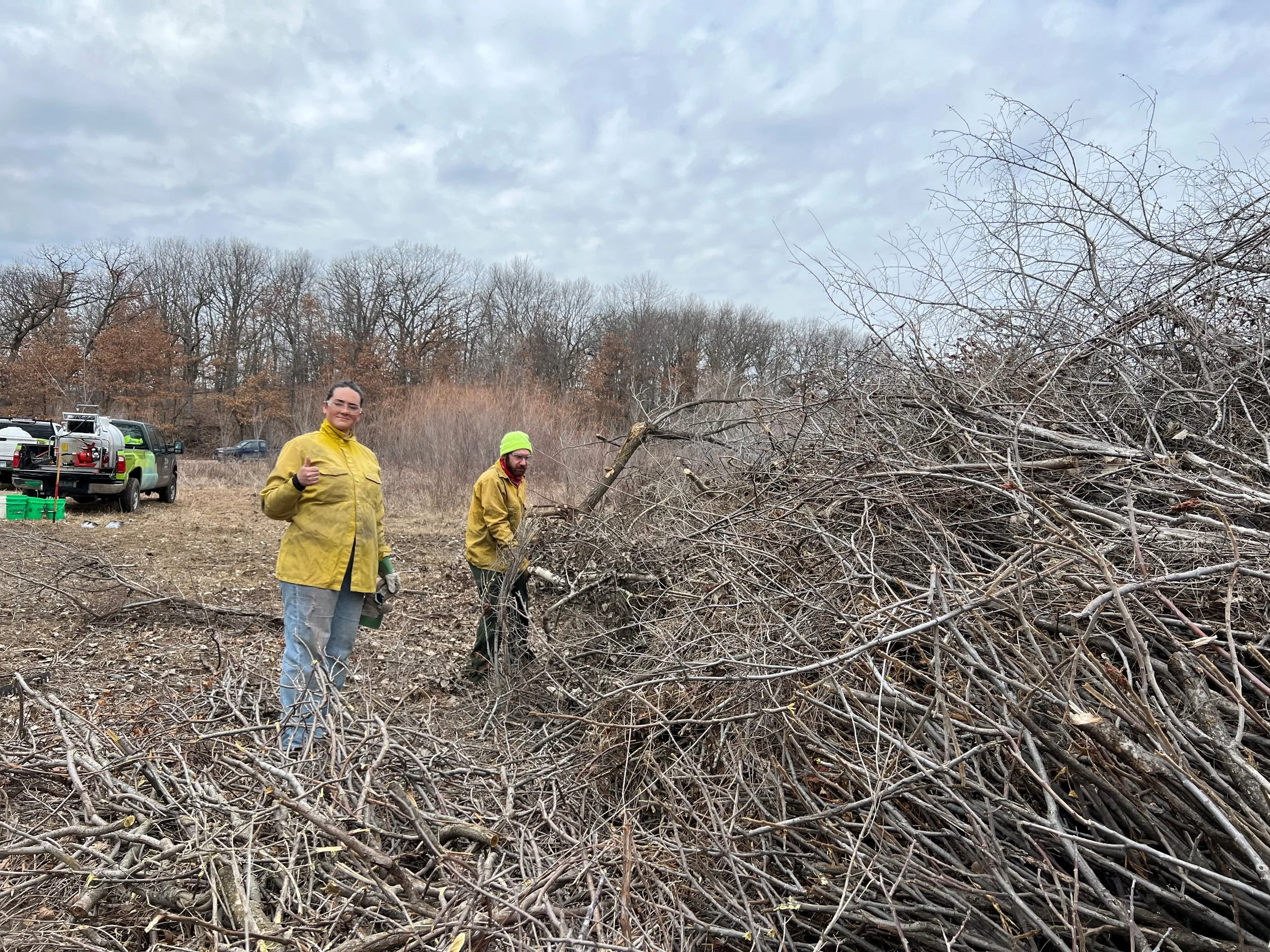
Waste wood disposal methods of days past, like pile burning and wood chipping, aren’t perfect answers to this problem. Pile burning releases smoke and carbon dioxide into the atmosphere and leaves burn scars on your land, while chipping necessitates expensive off-site removal. That’s where biochar kilns come in.
The science behind the kilns
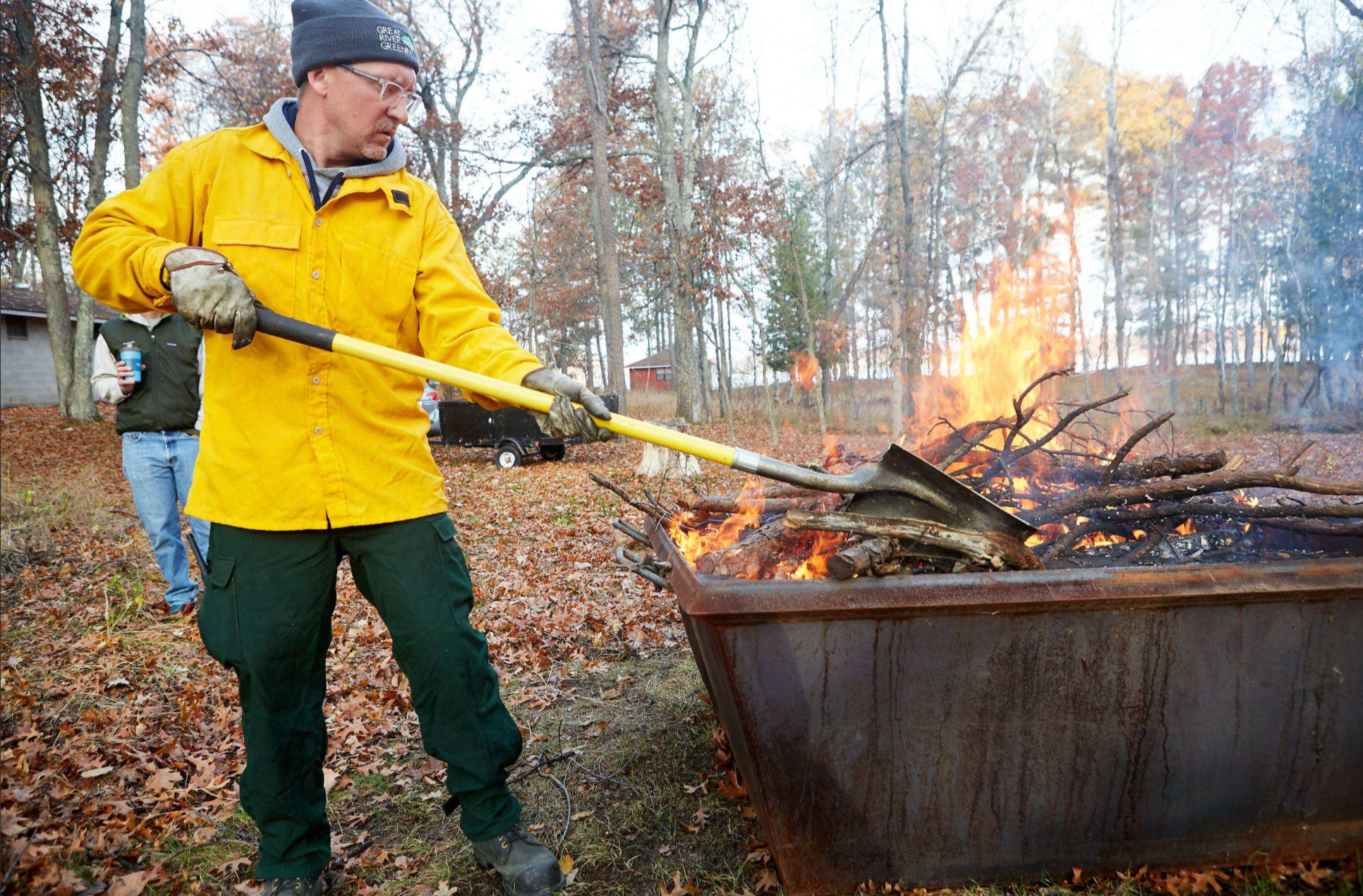
Biochar is created through a process called pyrolysis–heating biomass in a low oxygen, high heat environment–in specialized flame cap kilns.
This flame cap, a layer of fire at the top surface of the kiln, contains the gases within the kiln instead of releasing them. The biochar created within sequesters carbon into a highly stable form, locking it away for hundreds of years. This goes beyond lowering the environmental impact of burning the wood, creating a valuable byproduct that helps your soil.
Soil supercharger

What makes biochar so good for your soil? The answer lies in its porosity. The process of making biochar creates a product full of tiny little holes. So many, in fact, that one gram of ultra-porous biochar can have a surface area over 26,900 square feet––in other words, nearly half a football field. These holes make this lightweight product a super sponge, increasing nutrient retention and availability, stimulating microbial activity and root development, improving soil aeration, and increasing water-holding capacity of soil by 25%.
Biochar isn’t ready to start changing your soil right away, though. It needs 2-3 weeks to “charge” by mixing with organic matter in a 1:1 ratio. After this, you can blend your charged biochar/compost mixture into native soil at 10% by volume.
Rent your kiln today
The first step in creating biochar is having a kiln at your disposal, which is not a reality for most people. But, through Great River Greening’s biochar kiln rental service, you have access to three different sizes of kilns and our team of experts who can help explain exactly how to use both the kiln and the biochar. To learn more and get in touch with our biochar team, click here to submit an interest form.