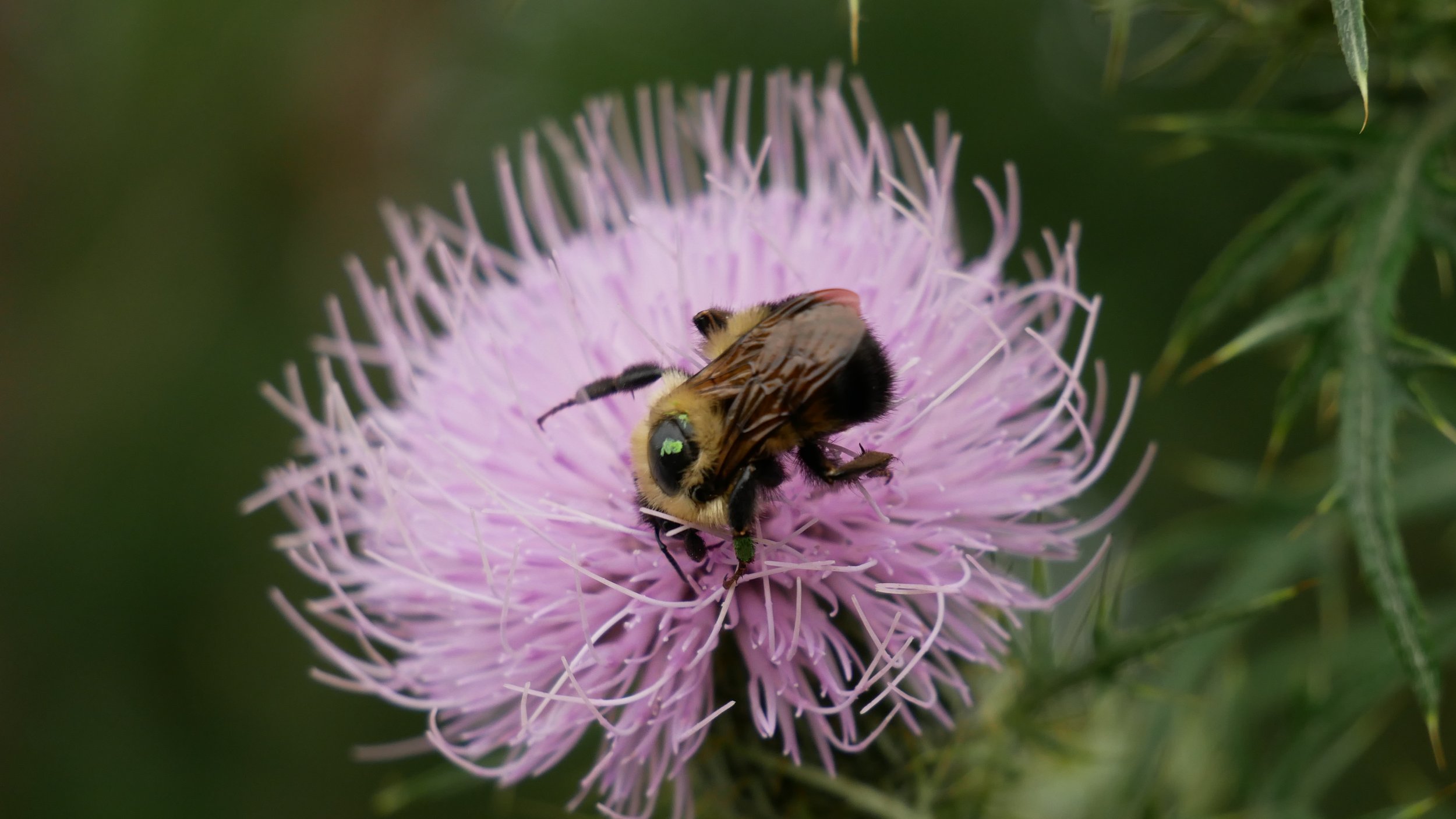
Restoring ecosystems is far more complex than just replacing invasive plants with native ones. To truly restore a site is to recreate the intricate patchwork of plant communities that best supports the habitat and its main stakeholders—the species who call it home. In a time of rapidly diminishing pollinator populations and disappearing prairies, Great River Greening is especially concerned with how bees, butterflies, and other pollinators are interacting with our restored prairies. But how can we know how they feel? We let them show us.
Like “Bee”dles in a Haystack
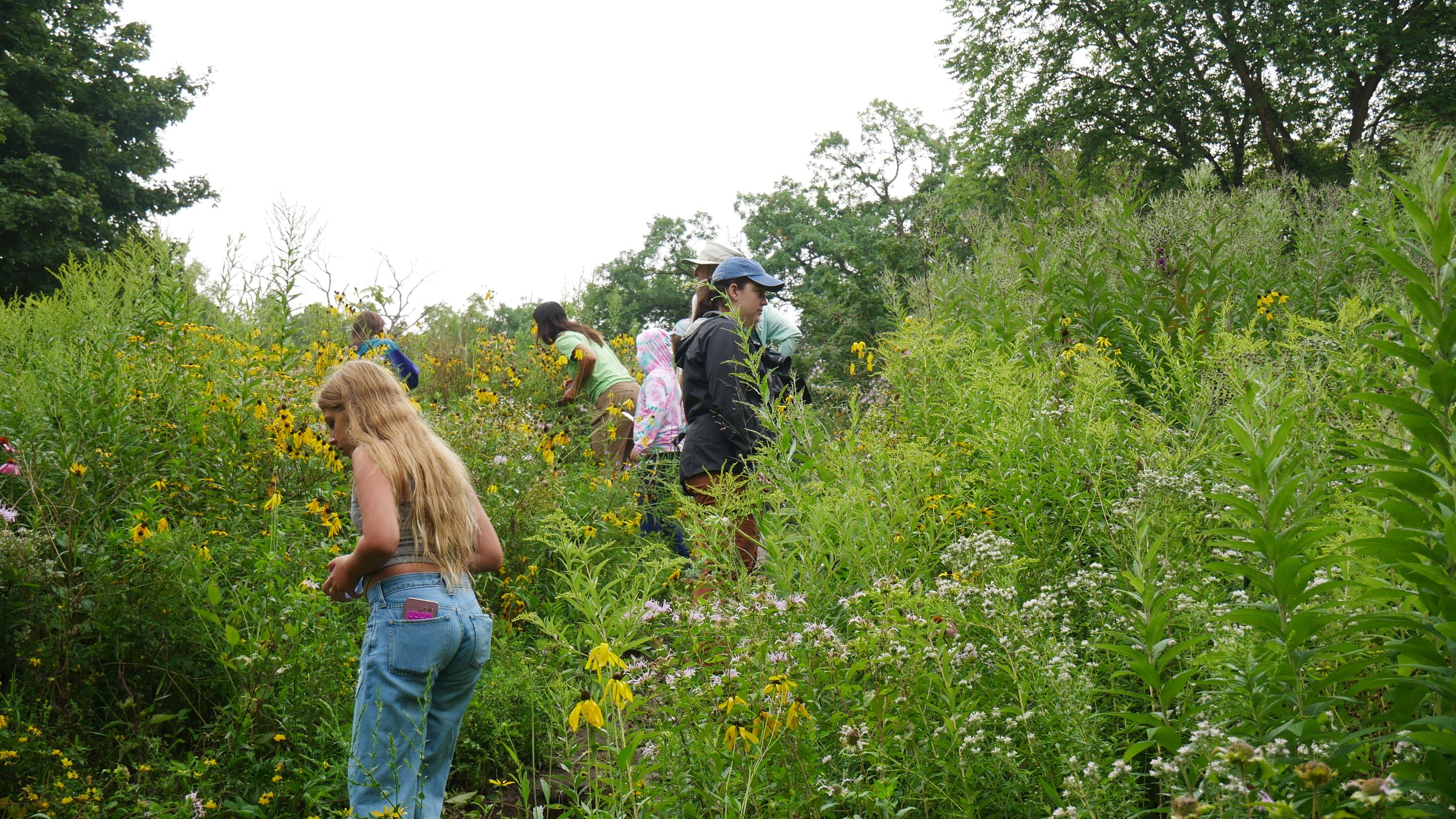
Capture and release event at Ritter Farm Park, August 2026.
With as many as 500 species of native bees buzzing around Minnesota, among other species, pollinators are hard to pin down for measurement. Even when they slow down while foraging, they typically spend just a few seconds on each flower. So how can we keep track of our visitors and where they do best?
A huge part of that answer lies in our dedicated volunteers. Through the power of community science, a collaborative method of data collection that engages the general public, our team of monitors allow us to divide and conquer at 12 sites across the metro using two types of surveys: timed pollinator meanders and capture and release field days.
Measuring a Meander
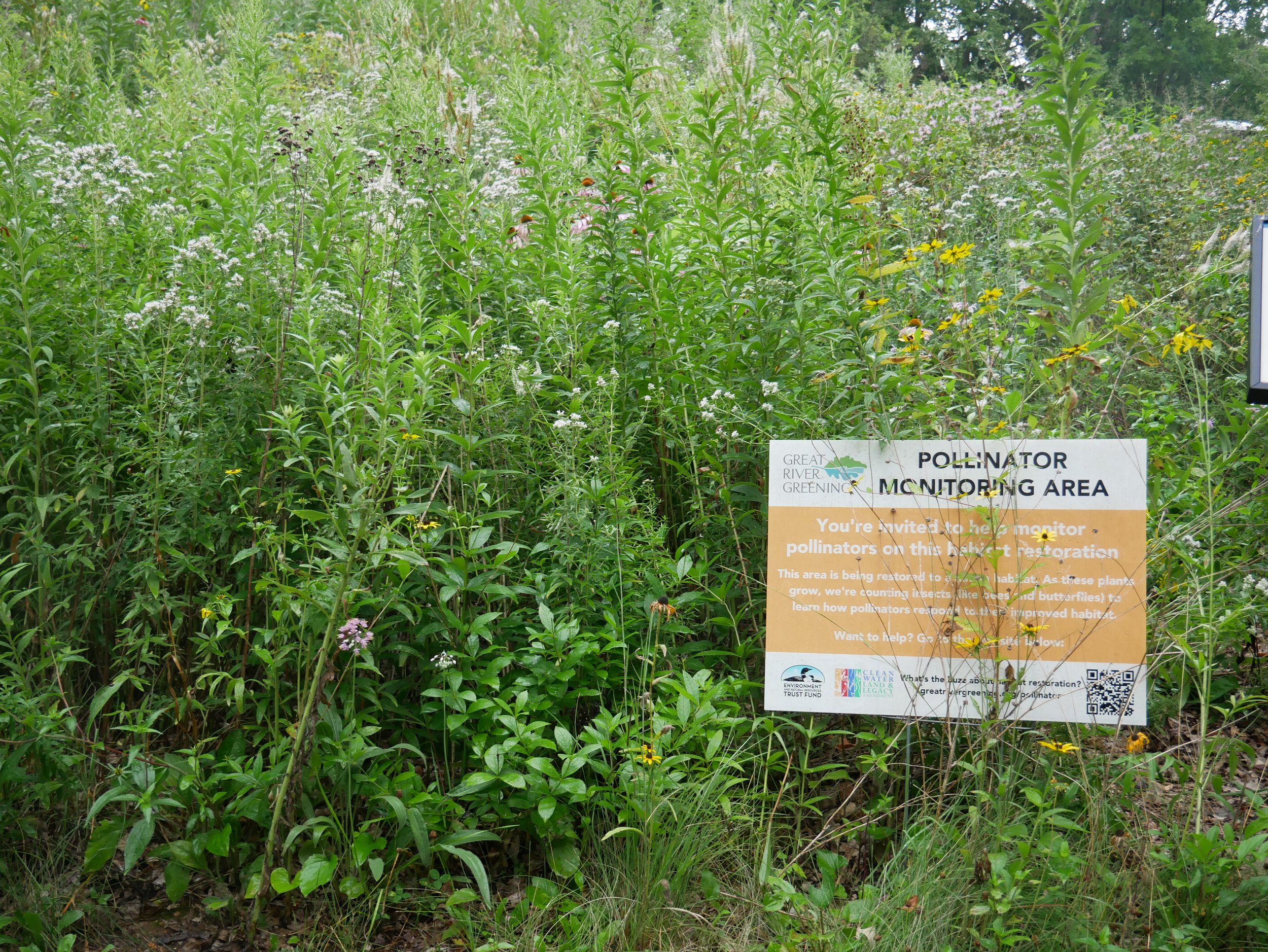
Armed with a map of the project area, data sheet, time keeping device, the iNaturalist app, and training from Great River Greening pollinator experts, our team of 80 volunteer pollinator monitors conducted 457 surveys from June into September in 2026. For consistent results, our magnificent monitors followed specific guidelines across all of their meanders.
To start, the day must be sunny enough to see your shadow with wind speeds less than 20 mph. Monitors locate the “start” and “finish” point on their maps, choosing a route to take them from point A to point B(ee) over the course of their 30 minute observation. After noting date, start time, and applicable conditions, the timer is started as our volunteers tally each category of pollinator they see, pausing the stopwatch if they need time to identify an insect. The goal is to keep moving and cover as much of the project area as possible while still reaching the ‘finish’ point, after which they’ll record the end time and any other notes. These notes contain some of our most valuable nuggets of information, like which species or types of pollinators were observed and the types of flowers they landed on.
Our eagle-eyed monitors are careful to count only pollinators, leaving out non-pollinating insects like dragonflies, grasshoppers, spiders, Japanese beetles, or non-flower using moths. Bees, wasps, flies, ants, beetles, butterflies, moths, and hummingbirds are all fair game.
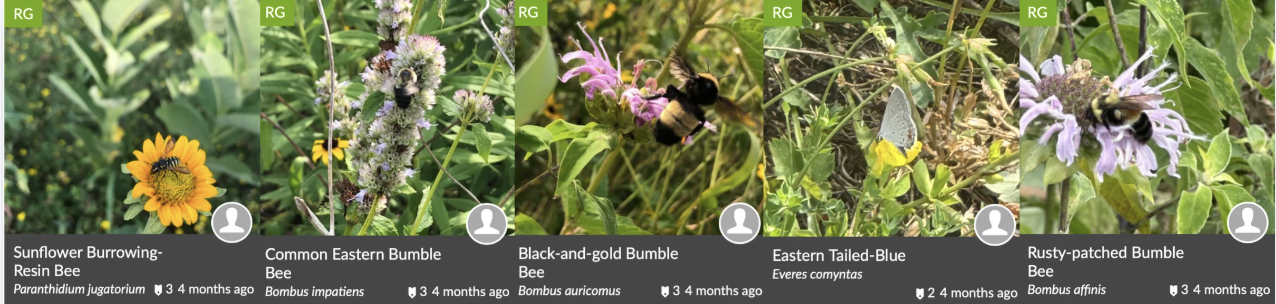
iNaturalist observations recorded by volunteers at a Greening pollinator event in July 2026. The green “RG” in the corner denotes a “Research Grade” observation that can be used by scientists, researchers, and educators.
Capture and Release
Working with the U of M Bee Lab, volunteers are trained to carefully capture bumble bees in small plastic containers as they land on flowers. After safely enclosing their pollinating pals and noting what kind of flower they were caught on, volunteers carry them to a station where U of M Bee Lab staff identify the species, record the flower they were found on, release the bee into a soft net to gently mark with a safe paint pen on their thorax, and set them free in the prairie.
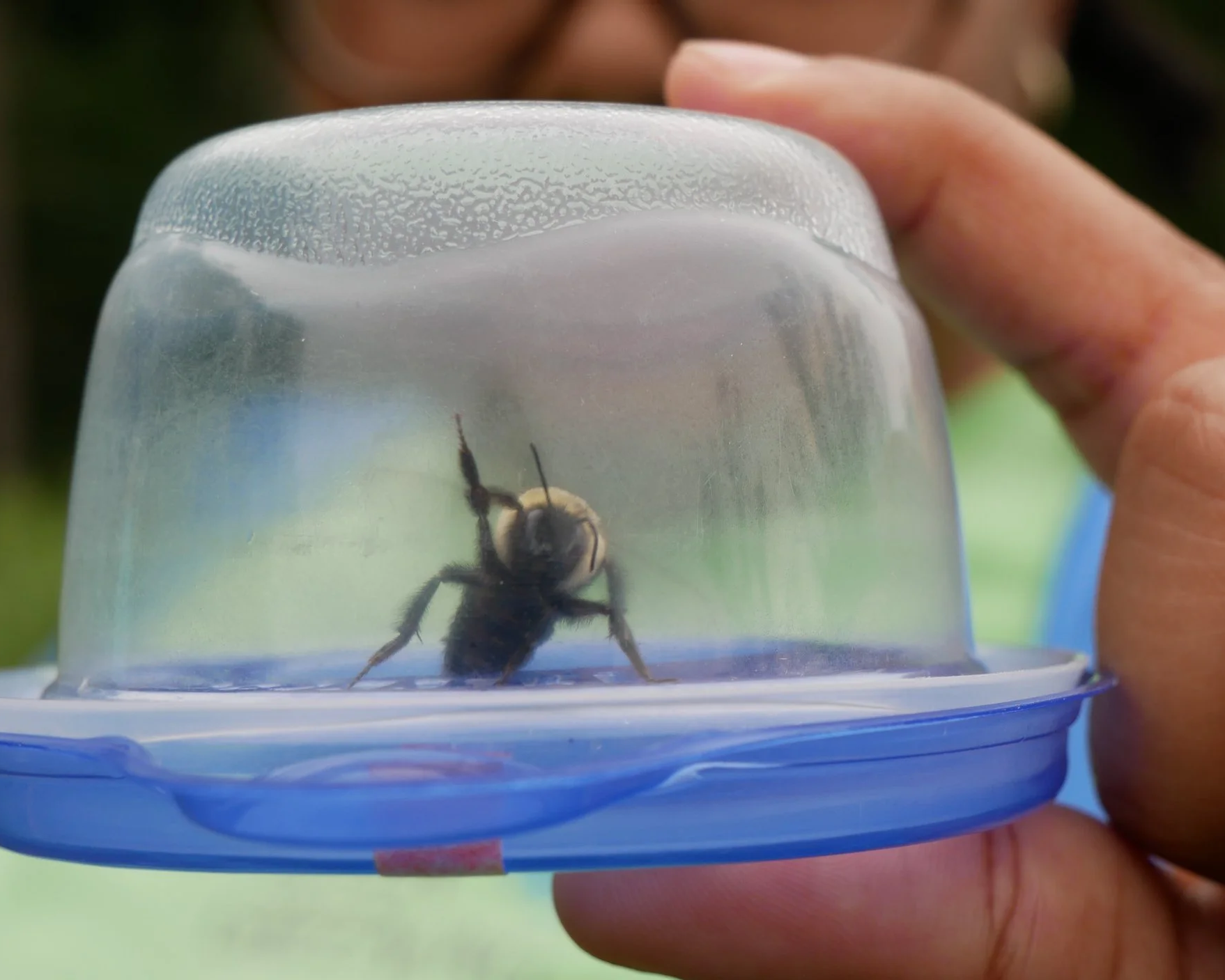
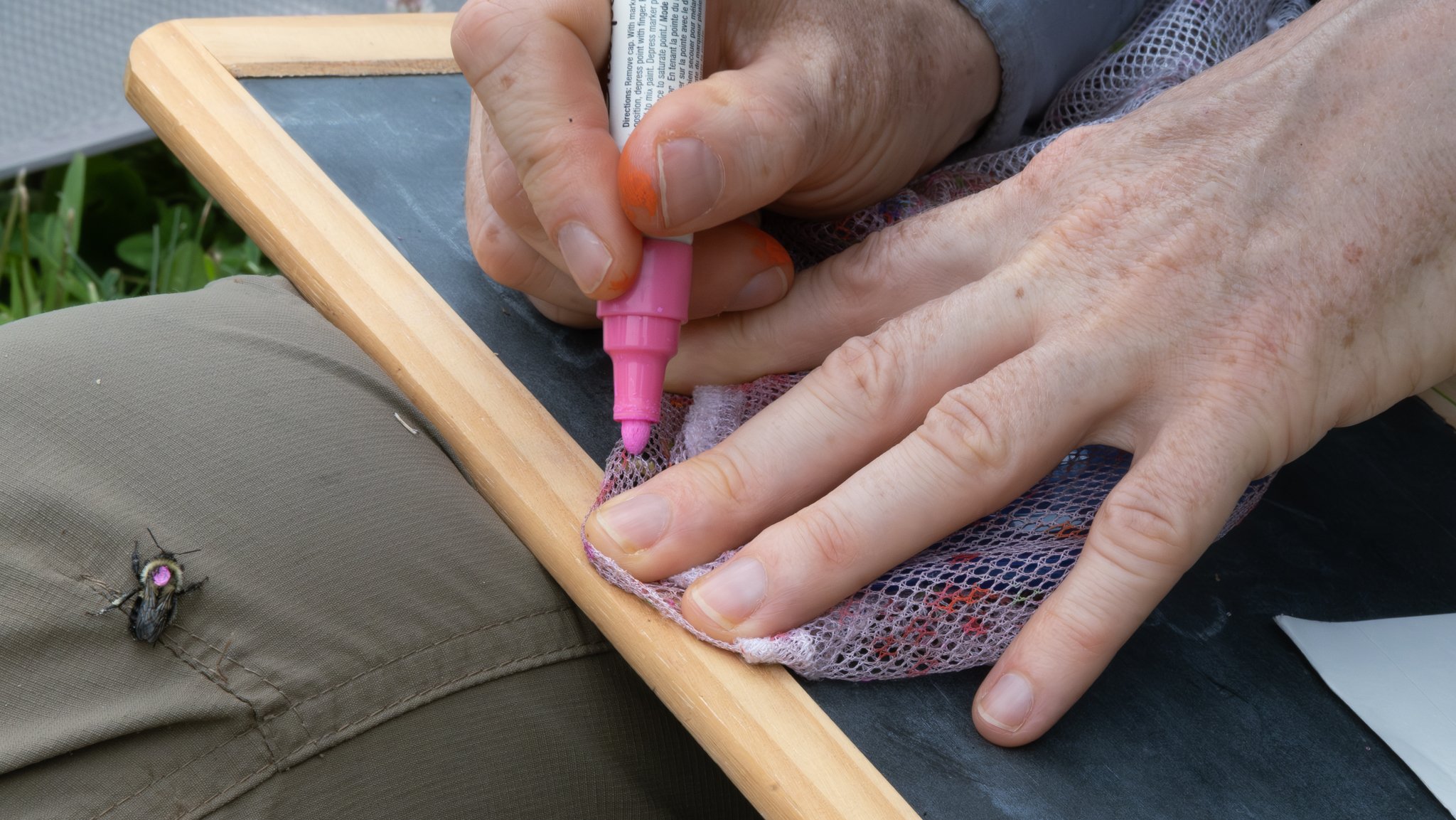
Using different color paint pens on observation days, we’re able to see if a frequent flyer has returned and distinguish between bumble bees that have already been recorded that day. From start to finish, this process takes no longer than a few minutes per bee and is completely harmless.
One, Two, Bee...
Tallying up our pollinators across sites, we’re able to see population growth as prairies become more established and even learn about their favorite places to dine. For example, this year at Ritter Farm Park, 66% of bees were found on Monarda fistulosa—also known as Wild Bergamot or (aptly) Bee Balm—an increase of 13% from the year before. Our ecologists can keep this info in mind to help best support our native bumble bees at restoration sites across the state.
With up to 99% of Minnesota’s historic prairies gone, remnant and restored prairies have a crucial role supporting our pollinator species. Thanks to our hardworking staff and dedicated volunteers, we can continue listening to and learning from these wonderful creatures, helping to create pollinator paradises across the state.