Here’s how we’re working to protect it.
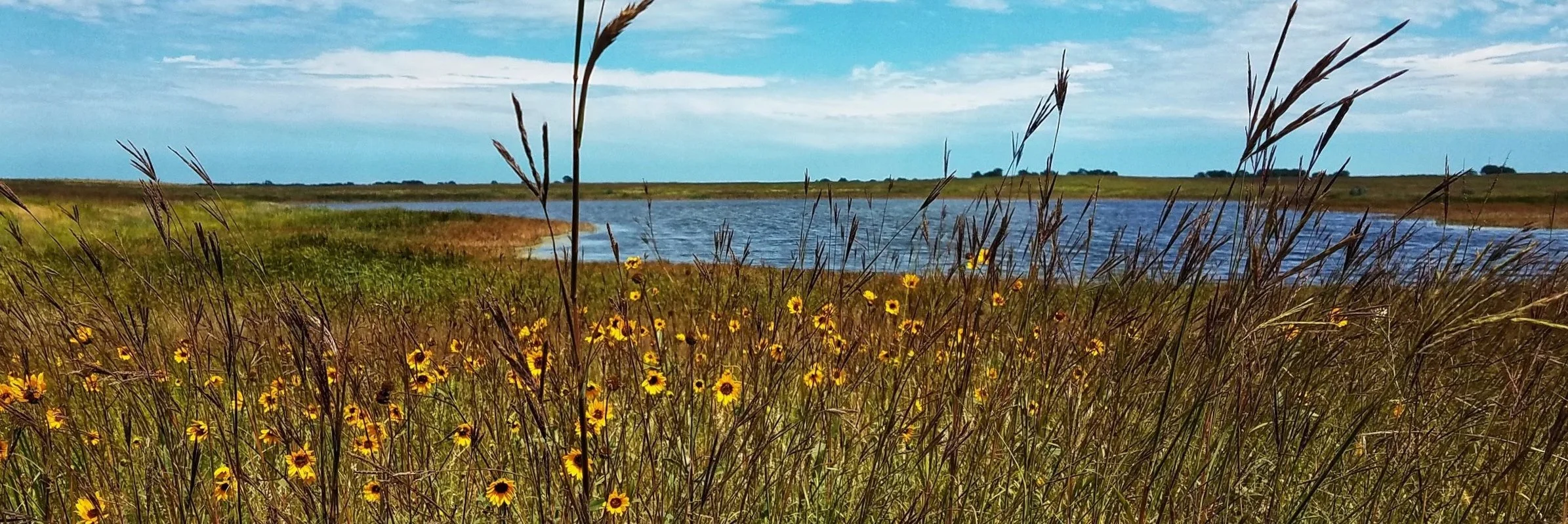
Big blue stem with wildflowers near a prairie pothole, photo by Marcie Hebert/United States Fish and Wildlife Service.
When a chicken crosses the road, they may be trying to get to the other side, but ducks and waterfowl are oftentimes crossing to get to the other ecosystem. With roads and development bisecting habitats, these birds have to make the trek from the grassy areas they build their nests to the waters where they forage. This mix of habitats is what makes the Prairie Pothole Region, also known as North America’s “duck factory,” so special.
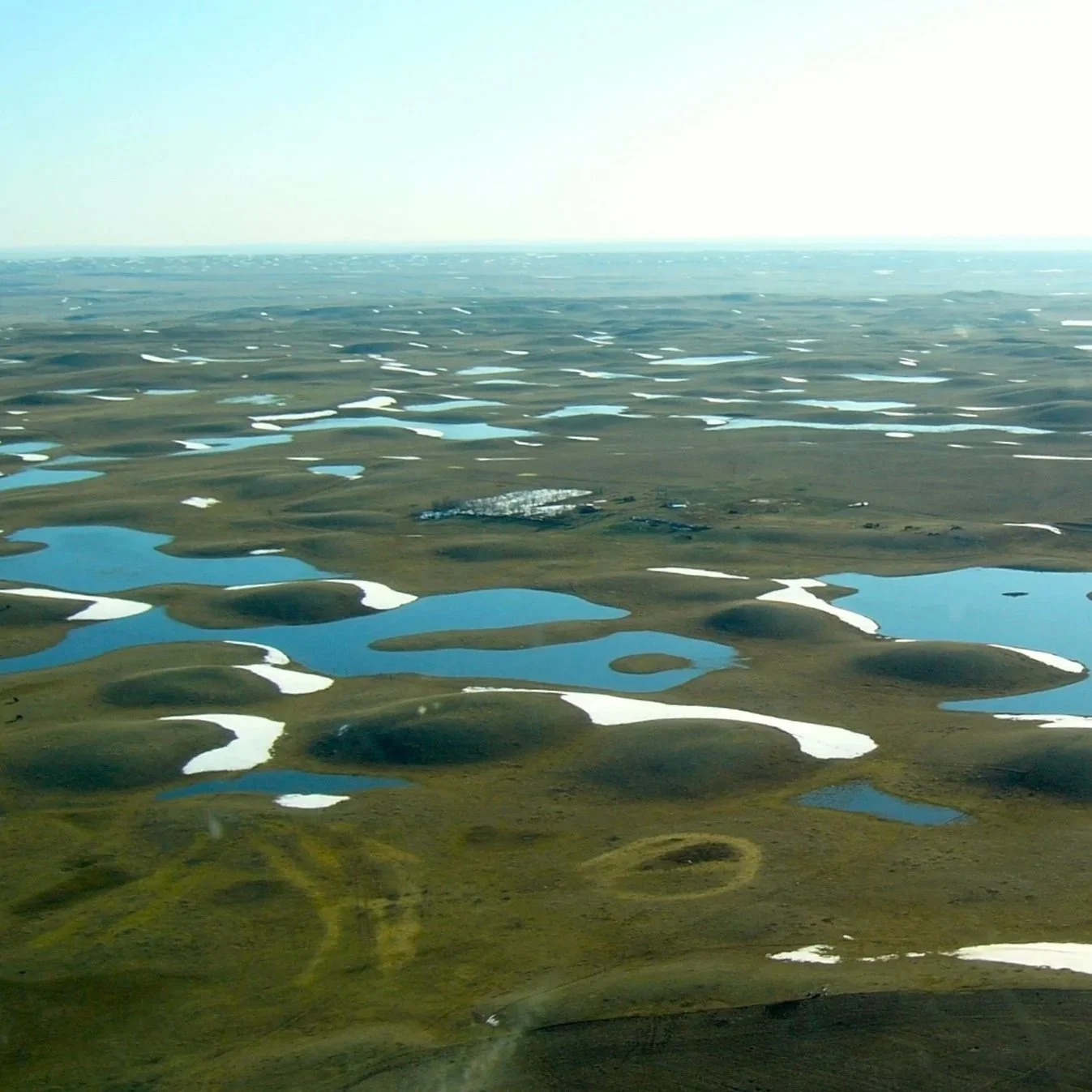
Prairie Pothole Region landscape showing high wetland density, photo from United States Geological Survey.
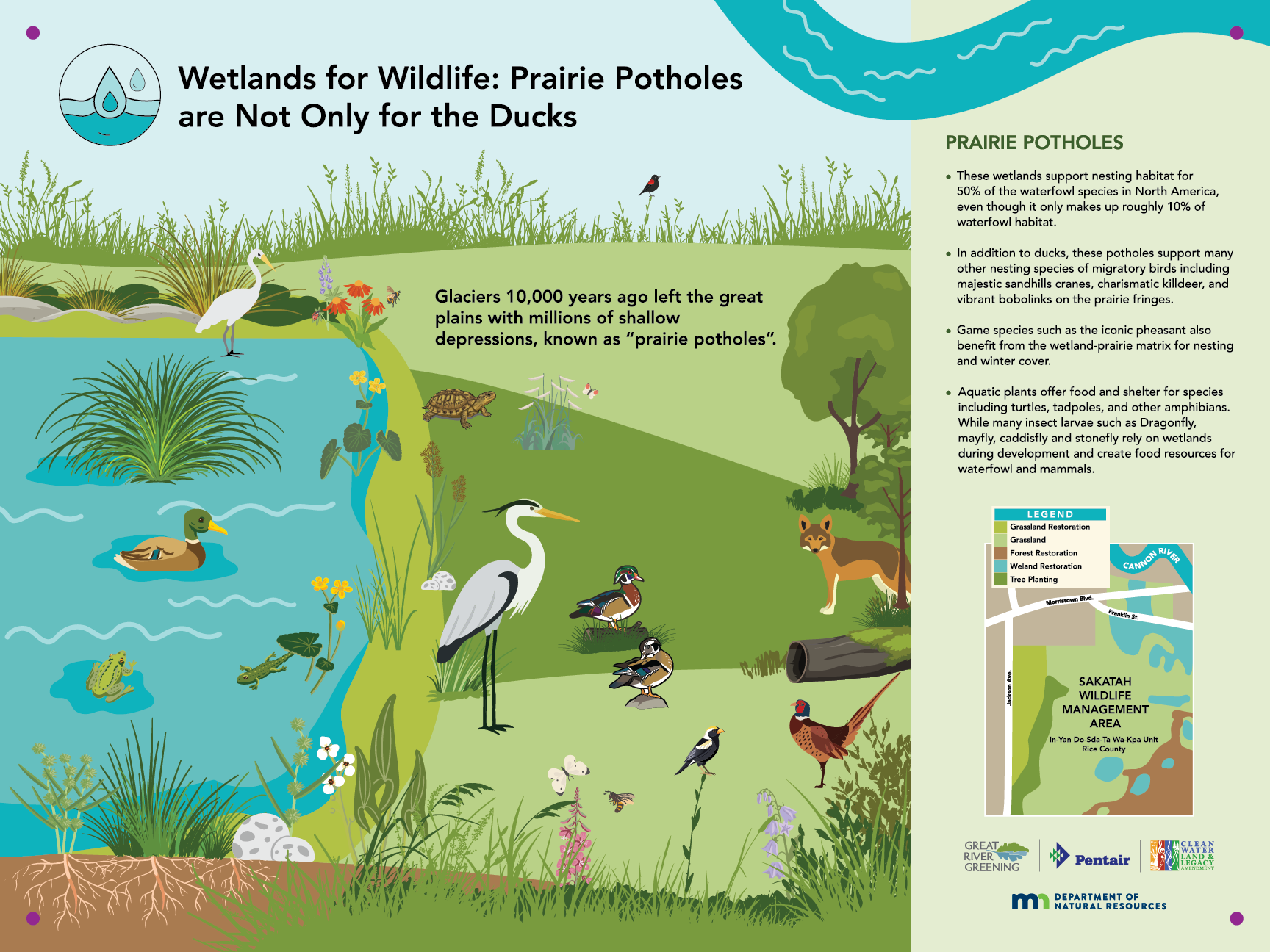
The Prairie Pothole Region is an expansive mix of ecosystems called a “wetland grassland matrix.” This prehistoric habitat began developing during the last ice age, when receding glaciers left shallow depressions that became seasonal wetlands. The surrounding grasslands were created by a shift to a dryer climate, migration of large herbivores, and indigenous land management. This mix of wetlands and grasslands makes a perfect habitat for waterfowl to breed and brood, which is why it’s home to more than 50% of North American migratory waterfowl.
Human development has put North America’s “duck factory” in peril—and with it, the tens of millions of birds who depend on it as a critical place in their migratory journey. Over the last century, much of the Prairie Pothole Region has been converted for commercial development and row crop agriculture. Where wetlands stood in the way of a productive crop fields or development lots, drain tile was installed to remove the surface water, and those seasonal ponds disappeared. This made sense for developers trying to control flooding and farmers trying to maximize crop yields, and tile remains a normal part of managing land today. But it also means many of the wetlands that once dotted the landscape are gone, along with the birds, water filtration, and flood buffering they provided.
Luckily, Great River Greening has the tools to combat these issues. When we started work at Sakatah Wildlife Management area, it was just a former corn field with drain tiles. By breaking these drain tiles, managing invasive species, and reintroducing native plants, we’ve restored 145 acres of prairies and wetlands on the site. This impact echoes through the entire watershed, where water quality improves, erosion stabilizes, waters slow down and decrease floods, and biodiversity explodes—especially our many feathered friends.
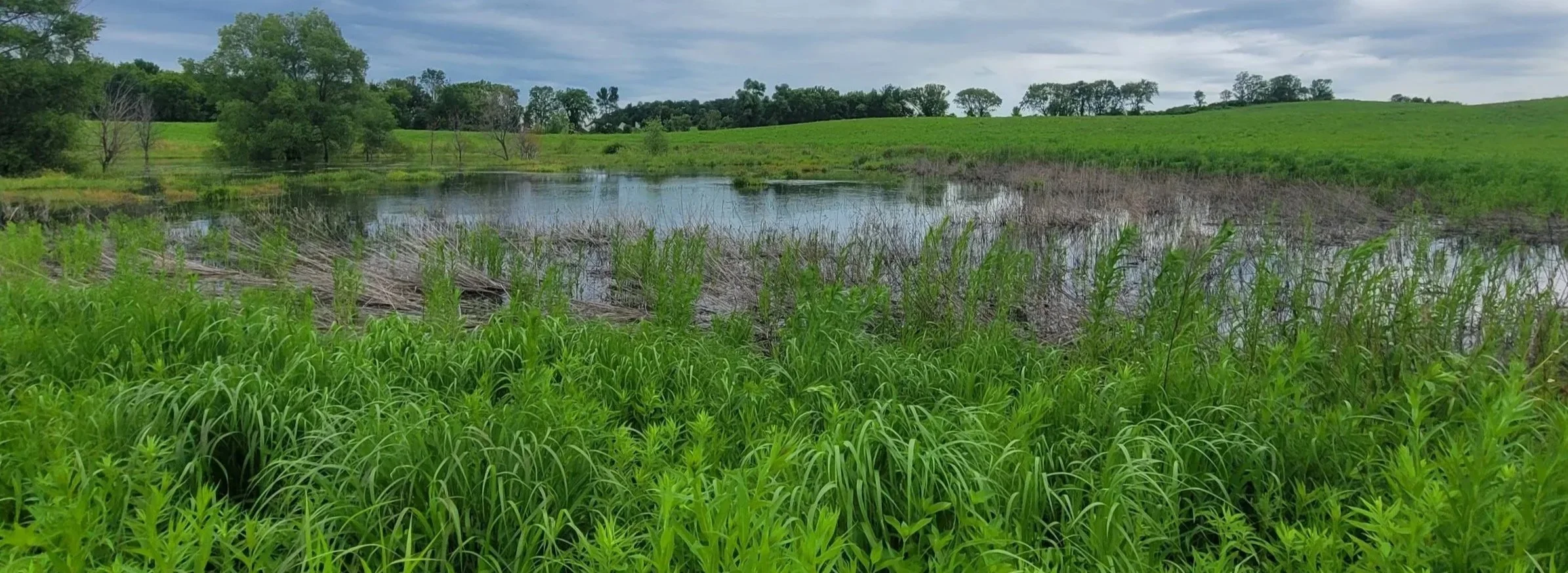
Restored wetland in Sakatah WMA, June 2026.
With over half of the Prairie Pothole Region drained, this work conserving endangered habitats, restoring Minnesota’s wetland grassland matrix, and protecting the migratory bird path are more important than ever. In time, we hope you see less ducks crossing the road, and more right at home in the prairie potholes where they belong.
Funding for our work at Sakatah WMA provided by Pentair, Minnesota Department of Natural Resources, and the Outdoor Heritage Fund.