
Rebuilding Tree Canopy in Bemidji After Devastating Loss
In June 2025, intense thunderstorms swept through Minnesota with the strongest measured winds in the state in 13 years. Gusts of winds in Bemidji reached a catastrophic 106 miles per hour, claiming vehicles, transmission towers, and an estimated 9 million trees in the city and surrounding areas.
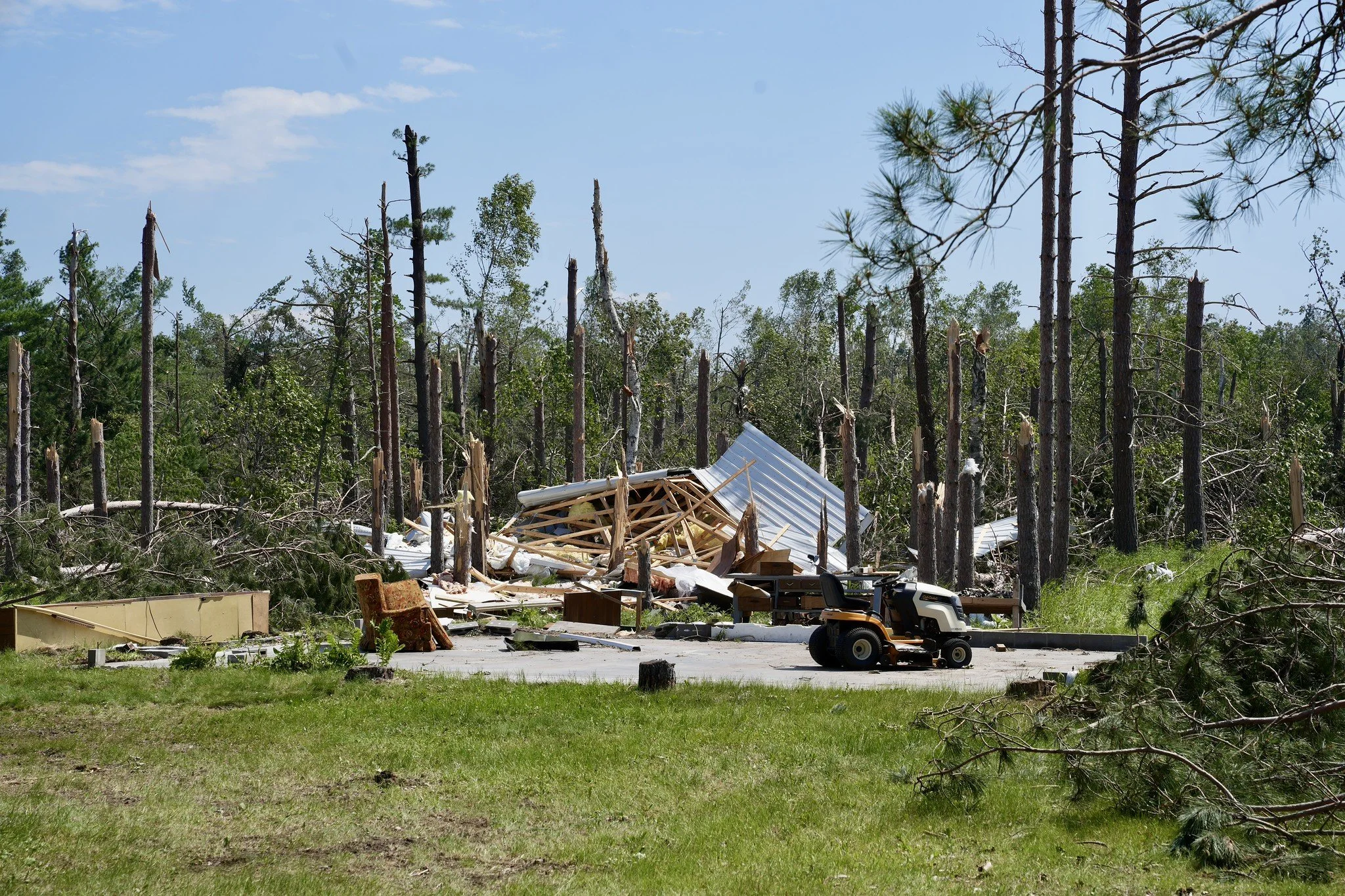
Downed trees and structures pictured in a storm damage survey on June 24, 2025. Photo from the Office of Governor Walz & Lt. Governor Flanagan.
For people and wildlife alike, the tree loss was devastating. Miles and miles of tree canopy, providing shade, clean air, and shelter, were decimated in a matter of days. The headquarters of the Bemidji Regional Interdistrict Council (BRIC), a special education cooperative that serves 11 small northern Minnesota school districts, was hit hard by this loss. An estimated 96 mature trees were destroyed in the storm, leaving much of the area barren, lacking shade, and more vulnerable to noise and airpollution from the road. That’s where Great River Greening stepped in.
Leveraging our grant funding for extra trees, when the time came to help Bemidji, we jumped on it. After reaching out to offer our help and being connected to BRIC, we developed a plan to replace those 96 lost trees with 100 new ones. Rooted in community, we were able to enlist the help of a local nursery, Nature’s Edge Lawn and Garden Center, contracting them to water and check on the trees during their more fragile stages in the first two years after planting.
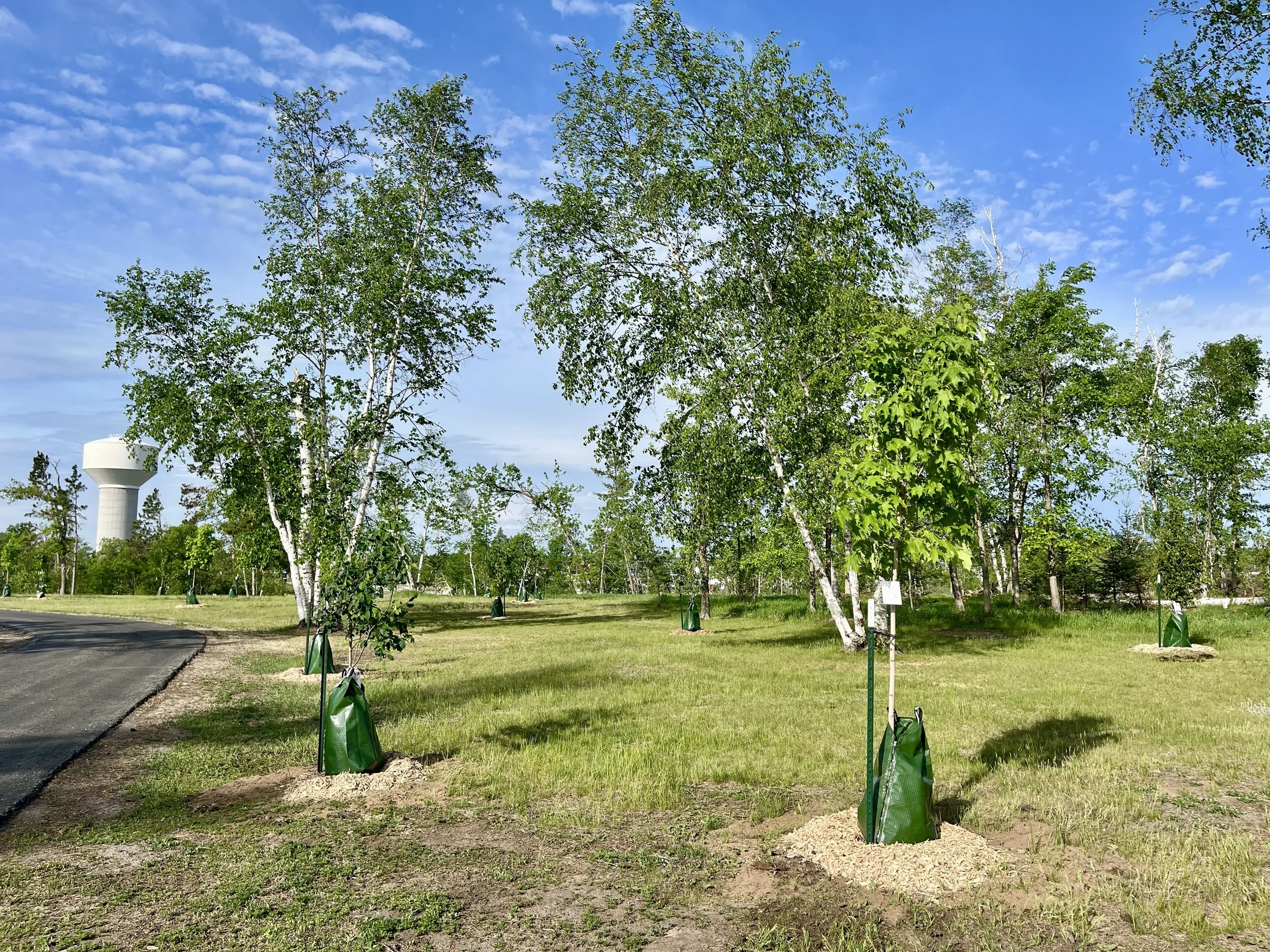
Newly planted trees at BRIC’s headquarters.
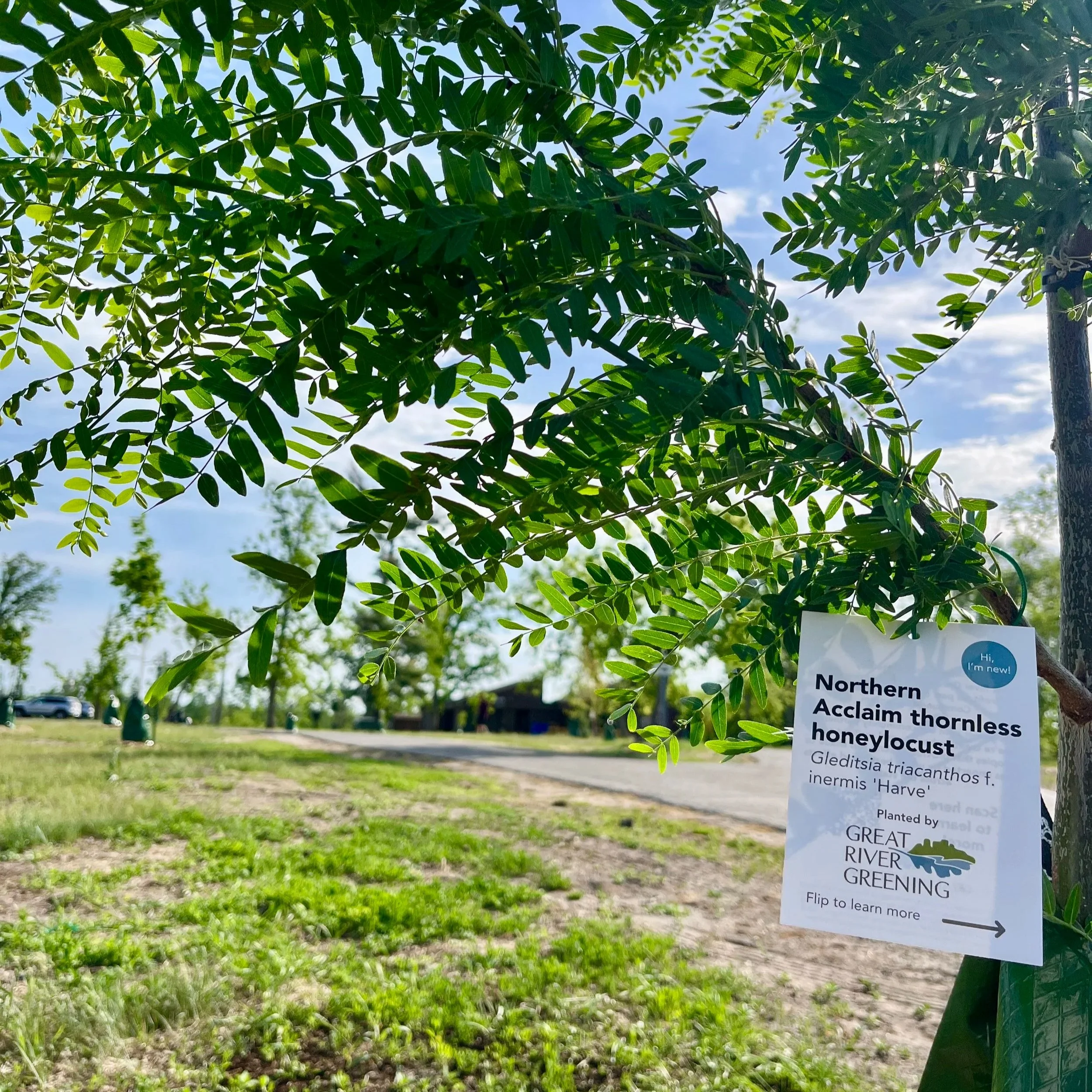
A Northern Acclaim thornless honeylocust, newly planted.
Rebuilding a tree canopy isn’t about replacing what was there—it’s about creating a climate-resilient and thriving habitat. In this area, especially after the storm, species diversity was at a low, limited mainly to typical Northwoods varieties like white pine, red pine, jack pine, balsam fir conifers, birch trees, and oak. For our Urban and Community Forestry team, this meant incorporating selections that were underrepresented in the canopy, bringing in adaptive species like Prairie Torch buckeye, Kentucky coffeetree, Northern Acclaim thornless honeylocust, and ginkgo. This variety will support a robust, biodiverse ecological community, supporting tree survival against pests, disease, and extreme weather.
On June 2, Great River Greening worked alongside volunteers from the community and the Mayor of Bemidji to plant this diverse selection of trees at BRIC’s headquarters. This planting is part of Great River Greening’s Cooling Minnesota Communities program, growing tree canopy in target areas identified as urban heat islands across the state. With support from the City of Bemidji, Great River Greening will plant more than 400 trees over the next three years, including another 150 this fall.
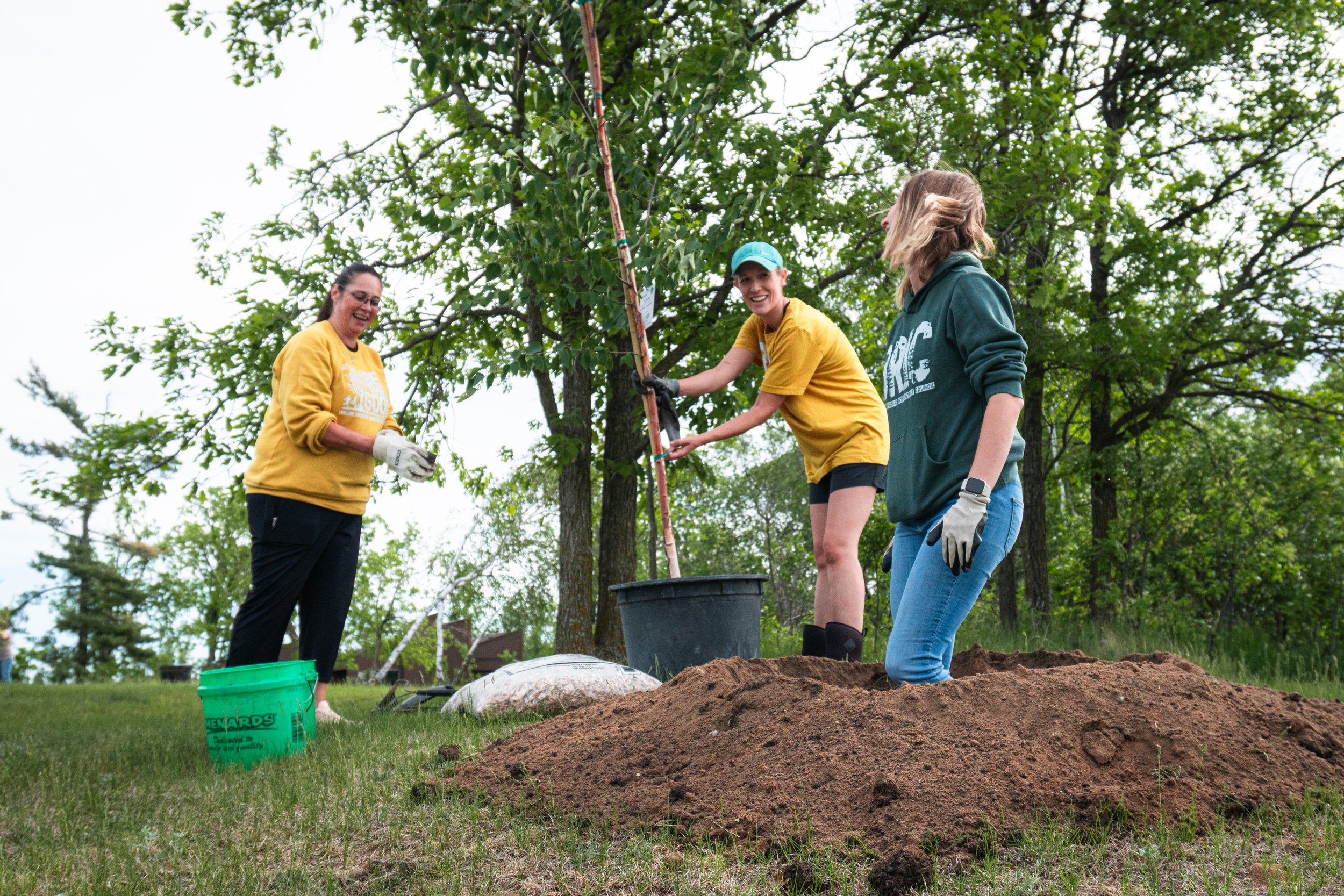
Volunteers plant a tree at the June 2nd event. Photo by Bill Lee.
These trees represent more than just replacing what was lost. Great River Greening, BRIC, the City of Bemidji, and residents have begun creating a greener, more resilient Bemidji through the power of community and collective care.
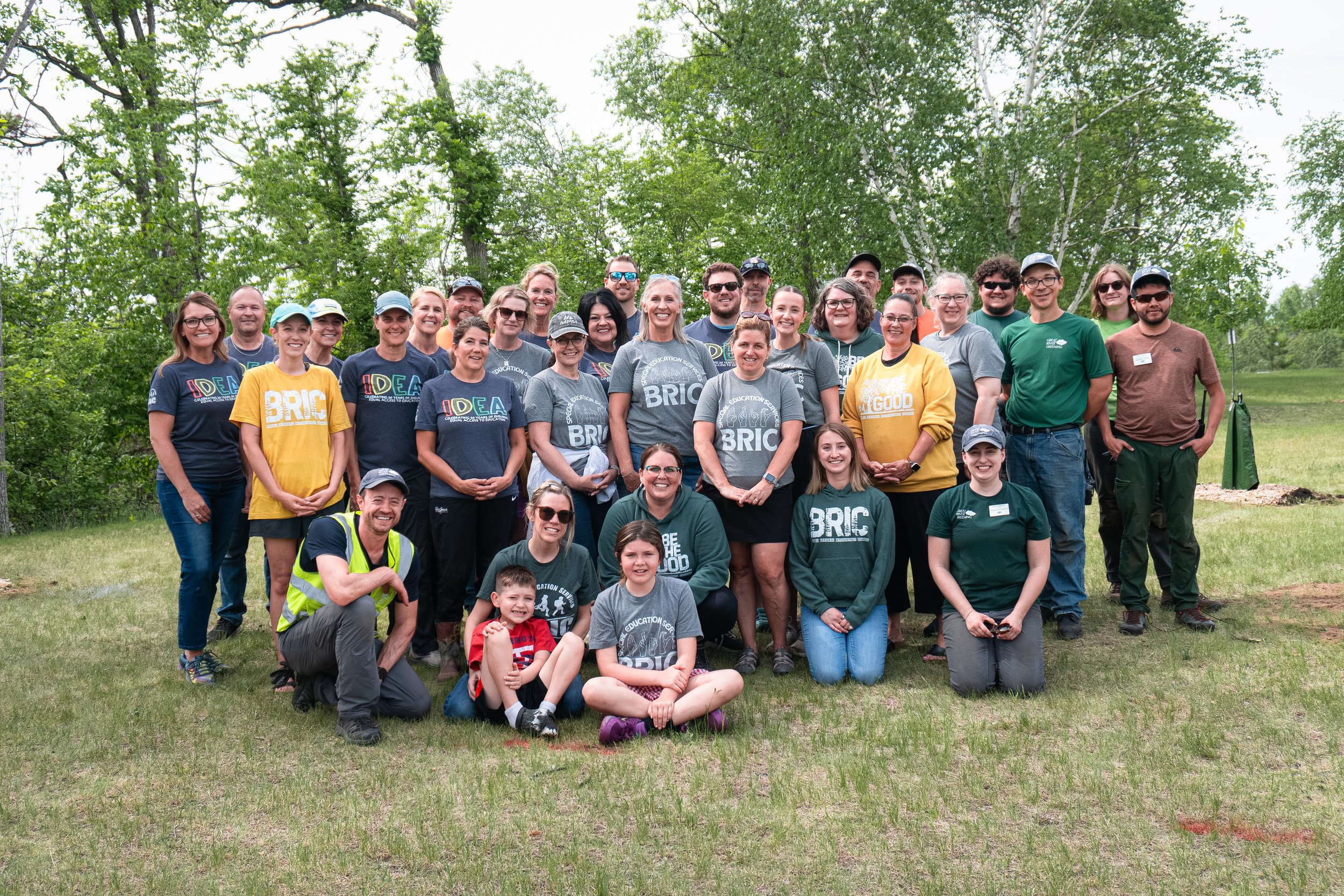
Volunteers and Great River Greening staff at the BRIC Tree Planting event on June 2, 2026. Photo by Bill Lee.
Funding for this project provided by the Minnesota Environment and Natural Resources Trust Fund as recommended by the Legislative-Citizen Commission on Minnesota Resources (LCCMR), and by the U.S. Department of Agriculture Forest Service through the Urban and Community Forestry Program. USDA and Great River Greening are equal opportunity providers and employers.