
The Flower That Can Bring Back a Rare Butterfly
It’s estimated that only 1% of Minnesota’s historic prairies remain today, making less dominant species especially scarce. Within this delicate web of life is a relationship between two extraordinary species, the prairie violet and the federally threatened regal fritillary butterfly. As regal fritillary populations dwindle, Great River Greening’s work takes us to Lamberton, Minnesota—the future home of 15,000 prairie violets.
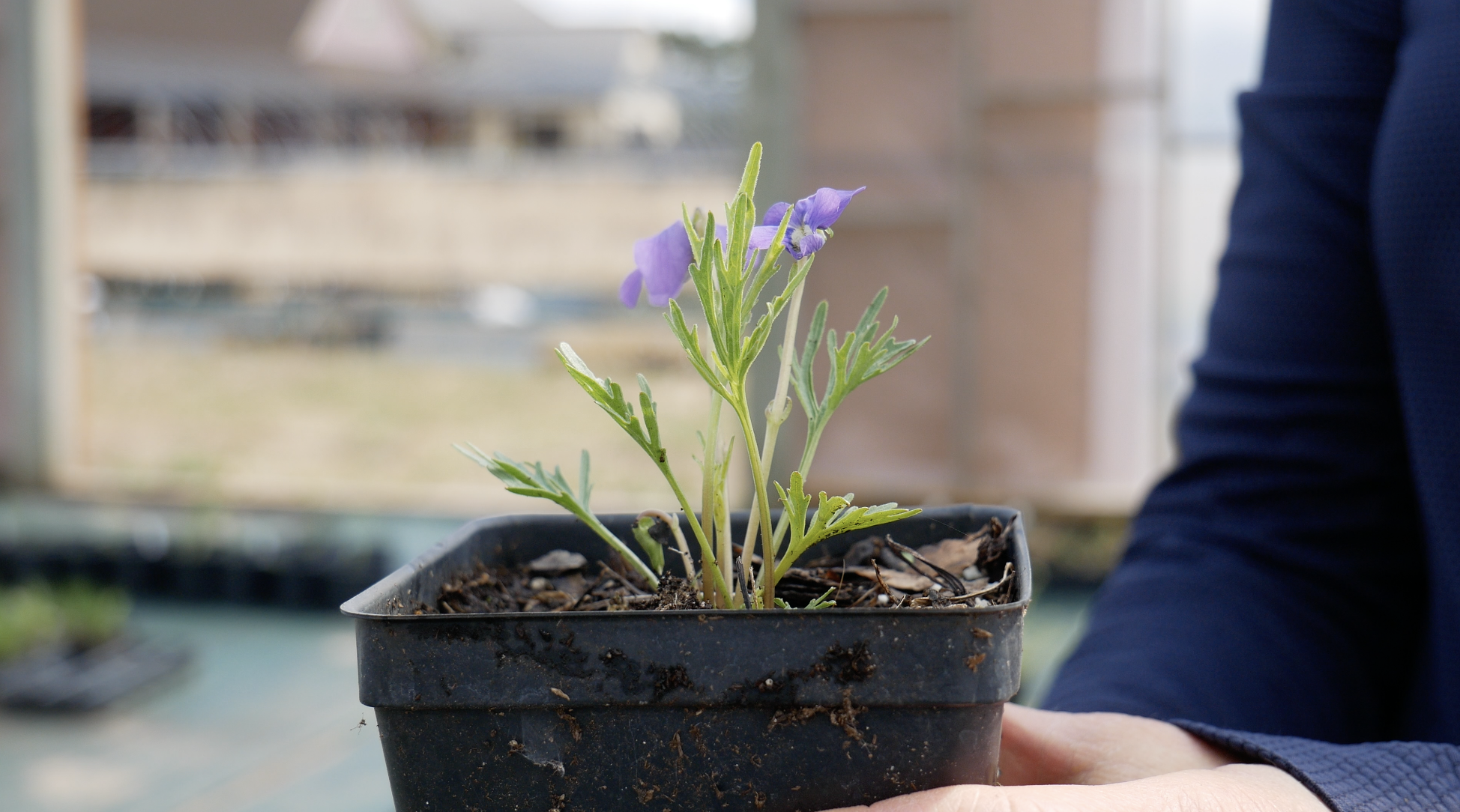
Prairie violet in bloom in a Prairie Restorations Inc greenhouse.
The prairie violet, Viola pedatifida, is a dainty purple flower that is becoming increasingly uncommon across our state’s prairies. Much of the issue comes down to cultivation. As environmental restoration organizations restore prairies across the state, prairie violets are not often included in the seed mix. Part of the issue is that these flowers do best in established prairie, meaning the habitat must be restored already, and then partially cleared to make way for the small plants. But the bigger reason is the seeds.
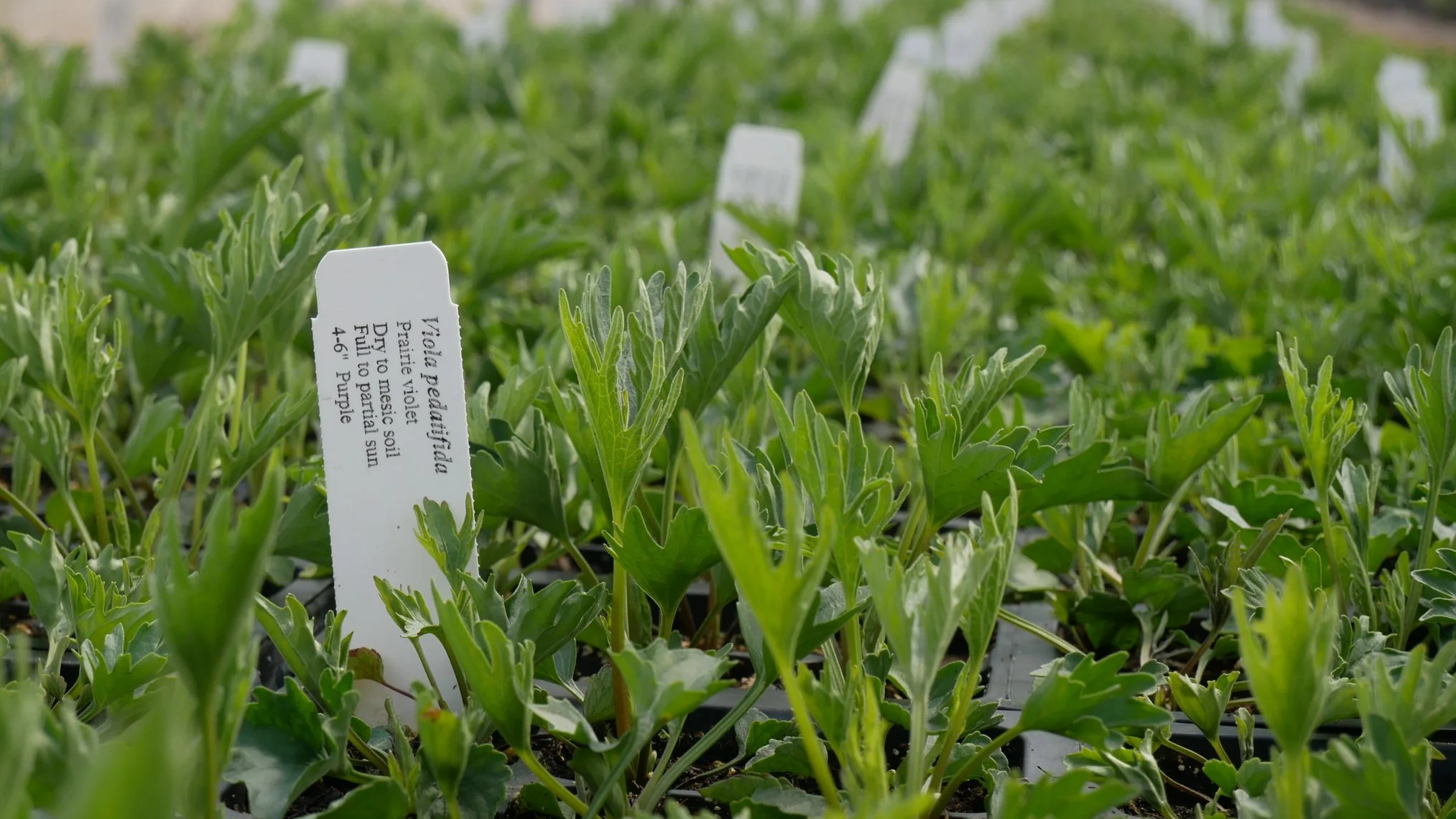
Prairie violets grown by Prairie Restorations Inc to be planted in Lamberton WMA.
When the plant reaches maturity, the purple flowers fade and produce a small, oblong seed pod. As the seed pod dries, its inner valves contract, squeezing the seeds inside until the pod splits open, explosively ejecting the seeds. This ballistic dispersal can fling seeds up to 16 feet in each direction, adding a layer of difficulty for commercial seed cultivation. And, on top of all of that, their seed germination rate is low, and they establish slowly.
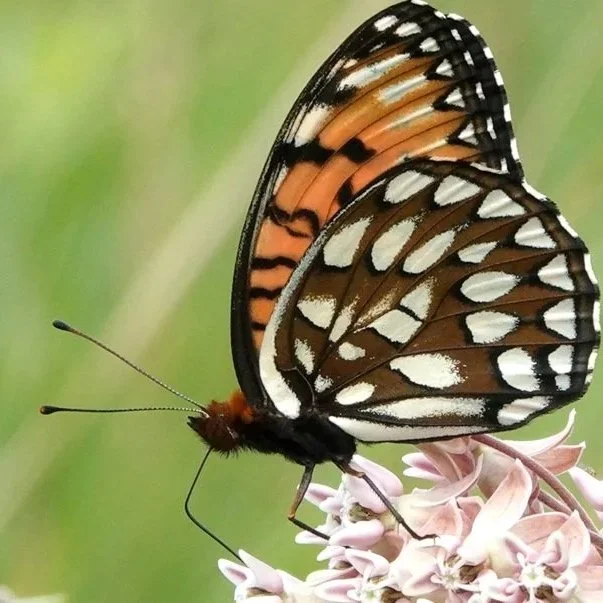
Regal fritillary butterfly, photo from the Minnesota Department of Natural Resources.
Despite the obstacles, prairie violets are a vibrant and essential part of Minnesota prairies, acting as a hardy ground cover once established, increasing biodiversity for pollinators and, most notably, singlehandedly supporting the early life cycle of the regal fritillary butterfly, Argynnis idalia, listed as a special concern species in 1996.
Just as milkweed hosts Monarchs, prairie violets are the sole host plant for the regal fritillary in its earliest stages of life. The caterpillars emerge in the spring, having hatched in the fall and hibernated over the winter, and feed exclusively on violets. This requires a large and stable violet population to support broods of caterpillars, as well as diverse prairie species to provide nectar for the adults and cover for hibernating caterpillars in winter.
We wouldn’t call prairie violets low maintenance. However, this process is well worth the effort to enrich our prairies and support these two unique species. That’s why we headed down to Lamberton earlier this month, planting the first of the 15,000 prairie violets that Great River Greening will plant at that location over the next two years.
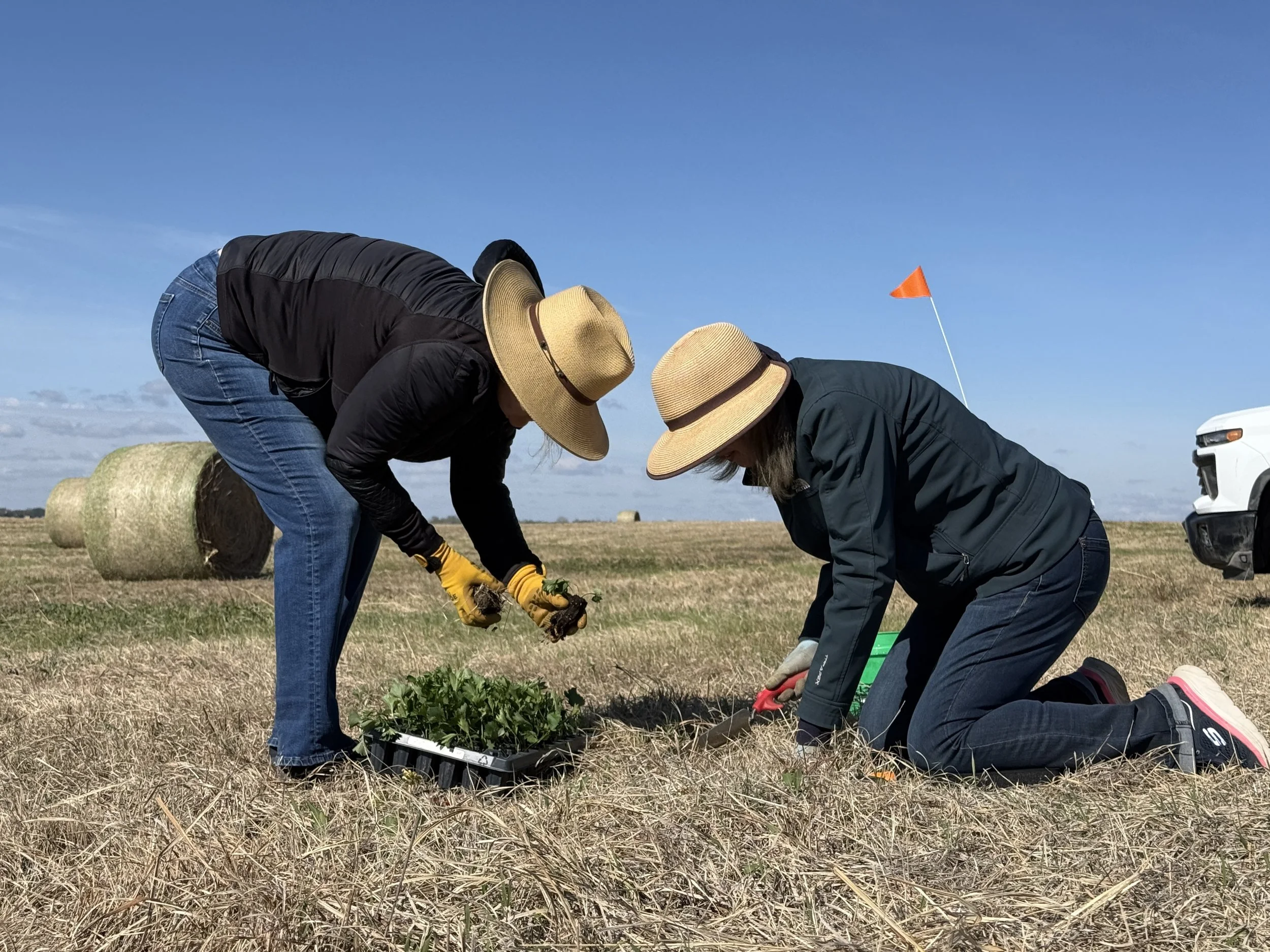
Great River Greening volunteers plant prairie violets in Lamberton on May 9, 2026.
Explosive, vibrant, unique, and precious. These species are a profound reminder of how each piece of the natural world is intertwined. As we work to bring prairie violets and regal fritillaries back in full force, we hope to make these prairies a little more whole.
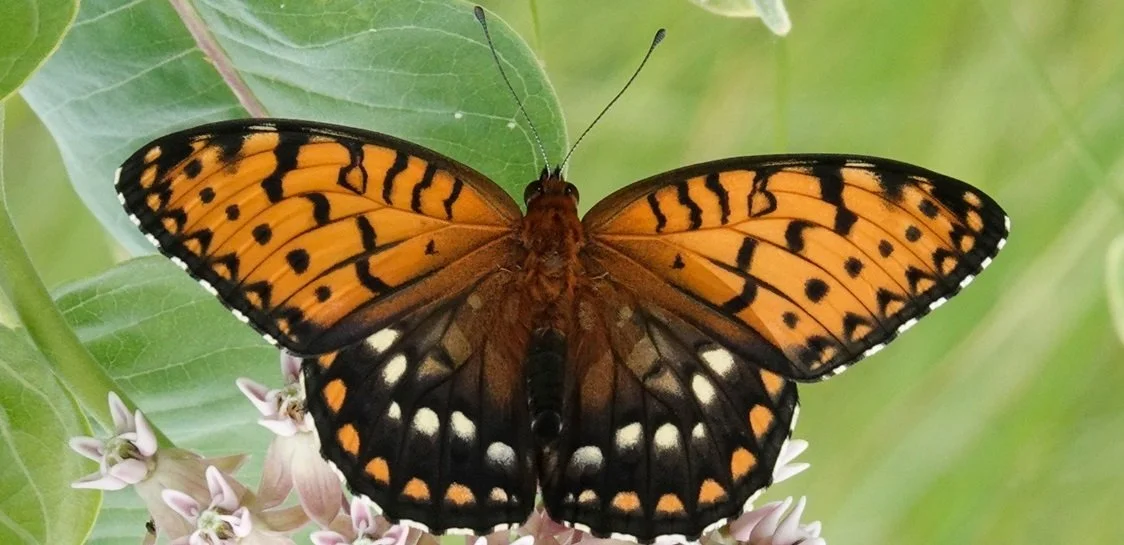
Regal fritillary butterfly, photo courtesy of Minnesota Department of Natural Resources.
Click here to support our work.
Thank you to the funder of this project, the Outdoor Heritage Fund (OHF), as appropriated by the Minnesota State Legislature and recommended by the Lessard-Sams Outdoor Heritage Council (LSOHC), to our partners, Minnesota DNR and Minnesota Land Trust, and to Prairie Restorations Inc for their collaboration.